

How to Earn Money with Affiliate Marketing for Beginners in 2026 (Introduction):
Imagine — you’re sleeping, and a notification pops up on your phone: “You’ve earned $47.50 in commissions.” This isn’t a dream; this is the reality of affiliate marketing that millions of people are living today.
My first commission was only $12. I thought it was nothing, but at that moment, I realized that it was all the result of patience and continuous hard work. Today, although I still earn $500–$1,000 a month, that first small commission was enough to boost my courage.
It’s 2026, and people still ask, “Is affiliate marketing dead?” The answer is absolutely not. In fact, the industry is bigger than ever. In 2023, the global market was worth around $17 billion, and by 2026, it is expected to reach $21–23 billion.
But let me make one thing clear — this is not a “get rich overnight” job. People who are really making money understand things that most beginners don’t. This blog is written to explain those things in plain English, from the beginning to advanced strategies.
So whether you’re brand new or already know something, this guide is for you. Keep reading, because there are some things ahead that you might not have read anywhere else.
What is Affiliate Marketing?
Affiliate marketing is very easy to understand if we take a simple example. Let’s say your friend has opened a new store, and he tells you, “Anyone who buys something from my store and you send it to them, you get 20 percent of the sale.” You tell people, some people buy, and you get money. That’s what affiliate marketing is all about — it’s all online.
In the official definition, you promote a company’s product or service, you get a special link (called an affiliate link), and when someone purchases through that link, you get a commission. The company gets sales, the customer gets the product, and you get money. It’s a win-win situation.
The best part? You don’t have to make your own product. Customer service, shipping, returns — it’s all the company’s job. Your job is just to get the right product to the right people. You can do this from home, on your laptop, or even on your mobile phone.
I put links to tech gadgets on my first website. A friend recommended a mobile and bought it through my link, which gave me my first income. This little experiment was enough to explain to me how it actually works.
How Affiliate Marketing Works Step-by-Step
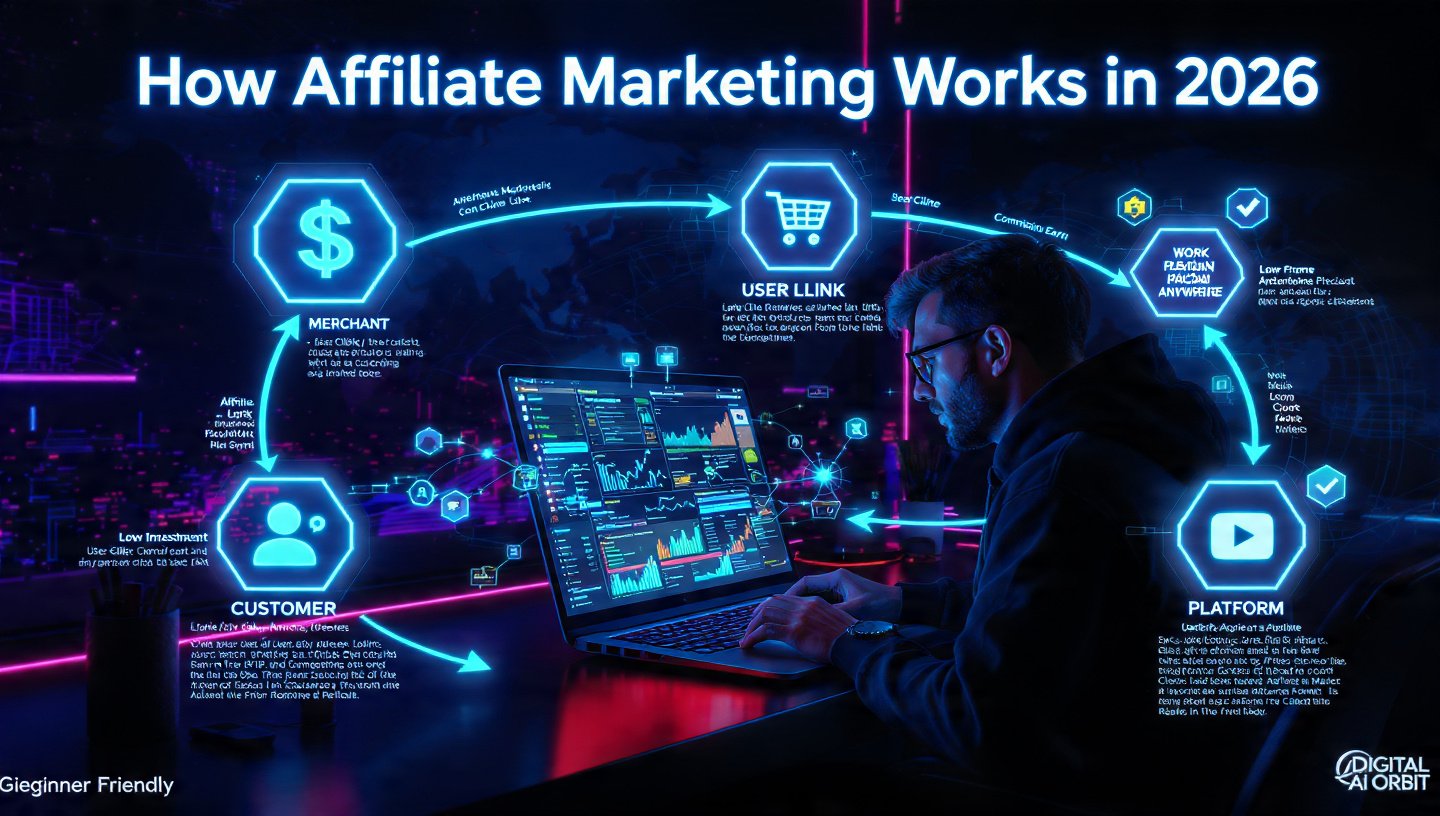
Many people initially think that this might be a complicated task, but once you understand it, everything becomes clear. Let’s see the whole process step by step:
- Step 1: You register with an affiliate program — like Amazon Associates, ClickBank, or another.
- Step 2: You get a unique affiliate link. This link is your identity, meaning it lets the company know that this customer came through you.
- Step 3: You share this link on your blog, YouTube channel, social media, or email.
- Step 4: A visitor clicks on your link and goes to the product’s website.
- Step 5: If that person makes a purchase (or takes another action like signing up), you get a commission.
This tracking system works through cookies. This means that if someone clicks on your link but doesn’t buy right away, but buys 2 days late, you’ll still get a commission (as long as the cookie is active). Amazon’s cookie is valid for 24 hours, while some platforms allow for 30–90 days.
Types of Affiliate Marketing Models
There are different ways to make money with affiliate marketing — and it’s important to know which model is best for you:
CPS stands for Cost Per Sale — This is the most common model. When someone buys something through your link, you get a share of that sale. Amazon Associates and ClickBank work similarly. Commissions can typically range from 3 to 75 percent.
CPA stands for Cost Per Action — it doesn’t require a sale. Someone fills out a form, downloads an app, takes a free trial, or submits an email — that’s all it takes. This model is sometimes easier for beginners because no one has to buy.
CPL stands for Cost Per Lead — This is a type of CPA where you get paid for bringing in leads, or potential customers. This model is very popular in niches like insurance, finance, and real estate, and you can earn anywhere from $5 to $50 per lead.
Revenue Share — Some SaaS or software companies give you a recurring commission every month as long as the customer stays on their plan. This is the most passive income model — do one thing, earn for months.
Top Affiliate Platforms You Can Start With
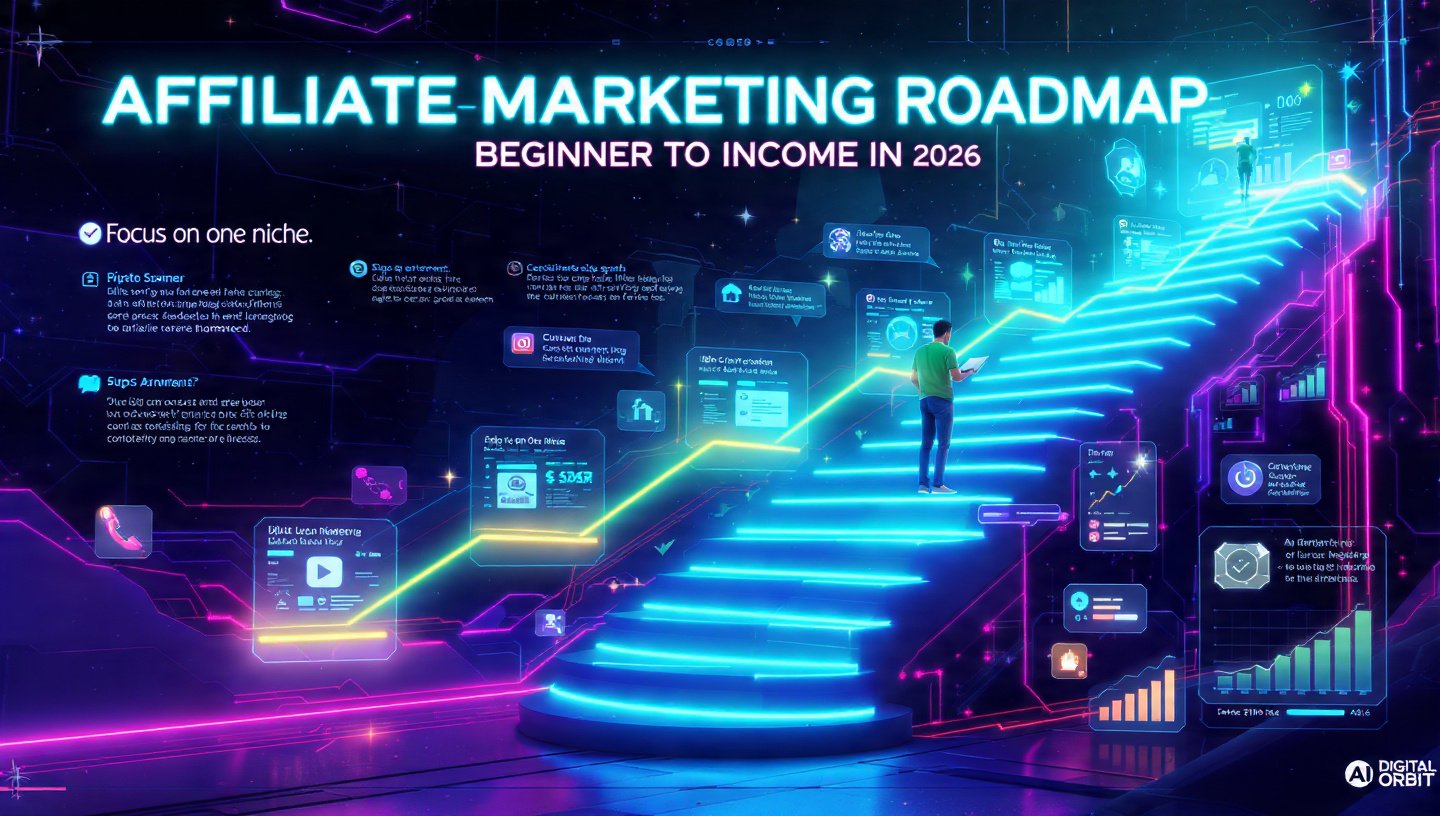
Here, we will mention the platforms that are still standing strong in 2026 and are useful for everyone,e from beginners to advanced marketers.
Amazon Associates
Amazon Associates is the largest and most popular affiliate program in the world. If you’re just starting, this should be your first step. The reason is simple — there are millions of products on Amazon, people already trust Amazon, and you don’t have to “sell” as hard.
The commission rate is usually between 1 and 10 percent, which doesn’t seem like much — but think about it: if you share a link to an expensive laptop or furniture, you can earn $20-40 on a single sale. And when traffic increases, these numbers become quite good.
ClickBank
ClickBank is a world of digital products — ebooks, online courses, software, memberships, etc. Commission rates here are quite high, sometimes as high as 50-75 percent. This is possible because the production cost of digital products is almost negligible.
When choosing products on ClickBank, look at the Gravity Score — it tells you how many affiliates are making sales from that product. But don’t promote everything — some products aren’t of good quality and can damage your credibility.
Digistore24
Digistore24 is a good alternative to ClickBank, which is more popular in Europe but is also widely used globally. It also offers digital products and has more flexible payment methods. If you are unable to create an account on ClickBank (which is sometimes difficult in some countries), then Digistore24 is a good option.
CPA Marketing Networks
CPA networks are for people who want to make money even without sales. MaxBounty, CPAgrip, and OfferVault are all platforms where you get paid for leads or actions.
Here’s a trick — for CPA marketing, you need to first build a good relationship with the network. Be professional when you apply, explain your traffic strategy, and quickly find a good affiliate manager who can tell you the best offers.
Platform Comparison Table
| Platform | Type | Commission | Best For | Payment Method |
| Amazon Associates | Physical & Digital | 1–10% | Beginners | Direct Deposit / Check |
| ClickBank | Digital Products | 20–75% | Content Creators | Check / Wire |
| Digistore24 | Digital Products | 20–70% | European Markets | PayPal / Wire |
| MaxBounty | CPA Offers | $1–$50/lead | Paid Traffic Users | Weekly / Bi-weekly |
| CPAgrip | CPA / Content Lock | Variable | Social Media Affiliates | PayPal / Wire |
Choosing the Right Niche
If someone asks what the most important decision is in affiliate marketing? The answer is: choosing a niche. This is the point where many people take the wrong path and then give up in frustration after months of hard work.
Niche means the topic or field you will focus on. For example, health, technology, personal finance, pets, travel, fitness, etc. But just choosing a popular niche is not enough — you need a niche that is a combination of three things:
- Your interest or knowledge, because it will be difficult to create content for years on something you are not passionate about.
- Buyer intent — meaning people are willing to spend money in this niche. Free cooking recipes may be a good topic, but people will buy less there.
- Competition vs. Opportunity — If there is too much competition, there is less room for new people; if there is too little competition, there is no market at all.
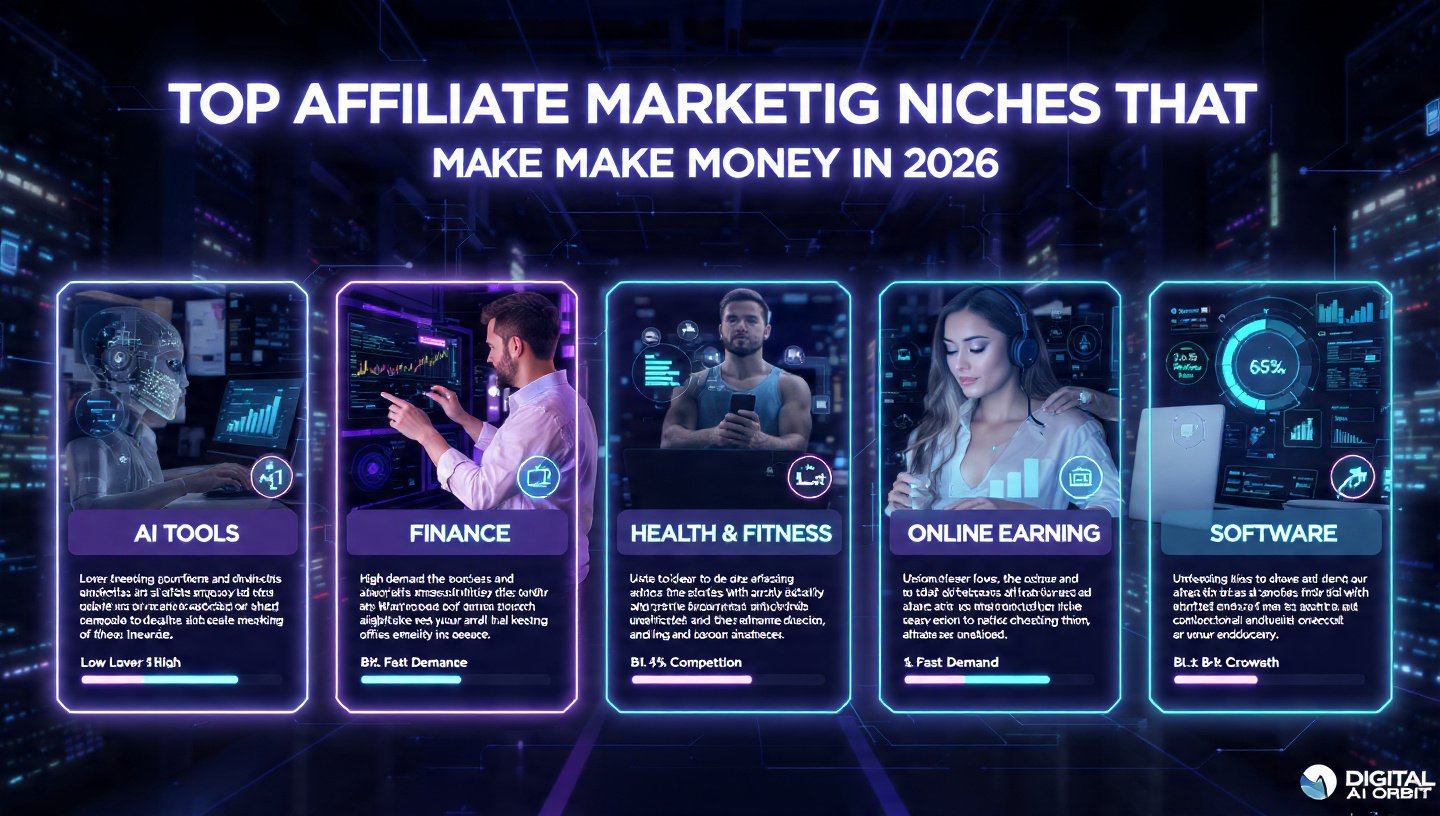
Some good niches for 2026 are: AI tools and software, personal finance (especially investing and credit), health and wellness (specific sub-niches like gut health or sleep), pet care, and home improvement. These are all evergreen topics.
One tip is not to choose a niche that is too broad. “Health” is a great topic. But “low-carb diets for diabetics” or “fitness for people over 50” — these are specific niches where you will have fewer competitors and your audience will be more targeted.
I initially chose the ‘Health’ niche, but it was too generic. Then I chose ‘Low-Carb Diets for Diabetics’, and lo and behold, within a few months, my blog started getting traffic. This personal experience shows why specific niches are important.
Keyword Research for Affiliate Marketing
If you don’t learn keyword research properly, you’ll spend months working, and no traffic will come. It’s the art of telling you what people are searching for on Google — and using it to create content that ranks.
The best strategy for beginners is to target long-tail keywords. For example, “best headphones” is a very competitive keyword — millions of sites are already ranking for it. But “best headphones for online teaching under $100” is a specific query with low competition and high buyer intent.
Free tools you can use: Google Keyword Planner (completely free), the free version of Ubersuggest, Ahrefs’ free keyword generator, and most importantly, Google’s autocomplete feature. Just type a keyword into Google and see what it suggests — these are the things real people are searching for.
There is another important thing in keyword research: search intent. That is, why are people searching for this keyword? If they want to buy, then there will be words like “best”, “buy”, and “review”. If they just want information, then there will be words like “how to”, “what is”. Buyer-intent keywords are more useful for affiliate content.

Creating a Platform
Now comes the question of where you will work from — that is, what your platform will be. Each platform has its own strengths and weaknesses, and your choice depends on your skills and resources.
Blog or Website — This is the most reliable platform. Once you rank for SEO, you can expect to get free traffic for months or even years. WordPress.org is the most popular option — get hosting from Hostinger or Namecheap, register a domain name, and get started for less than $30.
YouTube — Video content is very powerful because people trust what they see. You can create product reviews, tutorials, and comparison videos. Include affiliate links in the description. Building a good channel on YouTube takes time, but once you get going, it’s a great source of passive income.
TikTok and Instagram Reels — The power of short video content is huge these days and is especially effective for reaching the 18-35 age group. But you can’t link directly here (there’s only one link in the bio), so most people use Linktree or a landing page.
Email List — This is the platform that most beginners ignore, but it is the most valuable asset for experienced marketers. Your email list is yours — no algorithm can take it away.
Secret Content Strategy
- Many new affiliate marketers make the mistake of focusing solely on traffic — but traffic and conversions are two different things. What’s the point if you have thousands of visitors and no one buys?
- Conversion-focused content naturally leads readers to click your link and make a purchase. To do this, it’s important first to understand what stage your reader is at — is he or she still doing research? Or is he or she already making a decision to buy?
- The buyer’s journey has three stages: Awareness (being aware of the problem), Consideration (comparing solutions), and Decision (buying). Affiliate content mostly works at the Consideration and Decision stages — that is, content where people are deciding what to buy.
- I just wrote blog posts at first, but people weren’t buying. Then I created a ‘how-to’ video and email series, and the first earnings started coming in. This experience taught me that traffic alone isn’t enough; conversion is essential.
- Keep your content solution-oriented. State the problem, then provide the solution, then present the product as that solution. Don’t hard sell — Today’s online readers are very smart and can immediately tell if something is written just to sell or is actually helpful.
High-Converting Affiliate Content
Three types of content convert the most in affiliate marketing:
Product Reviews — This is content where you give a detailed review of a single product. A good review is one that is honest — that is, it tells you both the pros and cons of the product. It’s best if you’ve used the product yourself; otherwise, build a comprehensive picture by reading other people’s reviews. The reader should feel like you’re really helping them.
Comparison Posts — like “X vs Y — Which is better?” — These posts convert a lot because the person doing this search already knows about both options and is trying to make a final decision. Your job is to help them make a clear, honest decision.
Best of Lists — “Top 10 best X for Y” — This format is great for SEO and conversions. People want to know what the best options are on the market. Include an affiliate link in each item and explain who the best option is for.
A pro tip: Have a clear “Call to Action” (CTA) in your content — like buttons or links that say “Check Latest Price” or “Get This Deal.” Tell people what to do next.
SEO Basics for Affiliate Marketing (On-Page + Off-Page)
SEO stands for Search Engine Optimization — this is the process that gets your website to the top of Google. SEO is the cheapest and most sustainable traffic source for affiliate marketing. Once you rank, traffic keeps coming for months without any extra work.
In On-Page SEO, the first thing that should be done is to make sure that the title tag — that is, the title of your page — is correct. It should contain your main keyword and be less than 60 characters. The keyword should also be included in the meta description and be within 150-160 characters. The keyword should appear naturally in the content — don’t force it repeatedly. Also, optimize the alt tags of images with keywords.
The correct use of heading structure, i.e, H1, H2, and H3, is also very important. H1 should be only one, H2 should be the main sections, and H3 should be the sub-topics. Also, do internal linking — put links to your other articles so that visitors spend more time on your site.
Off-Page SEO means getting backlinks from other websites. Backlinks tell Google that your content is trustworthy and valuable. Quality backlinks can be built through methods like guest posting, broken link building, and HARO (Help a Reporter Out).
Free vs Paid Traffic Strategies
Here are the benefits and disadvantages of free traffic and paid traffic :
Free Traffic (SEO, Social Media, Pinterest)
The biggest advantage of free traffic is that there is no cost per visit. But it also has a drawback — it grows slowly and takes time to produce results.
Traffic from SEO is the most valuable because these people are actively searching for something. Pinterest is a platform that many affiliate marketers ignore,e even though it is very powerful, especially for lifestyle, recipes, home decor, and fashion niches. Pins on Pinterest keep driving traffic for months — they don’t disappear in a day or two like Instagram posts.
Reddit and Quora are also good sources of free traffic, provided you provide genuine,ne helpful answers and don’t spam. Add value to the community, and people will naturally go to your profile and from there to your site.
Paid Traffic (Google Ads, Facebook Ads, Native Ads)
Paid traffic gives fast results, but it costs money and can be a loss if you don’t know. That’s why experts say to learn the basics of affiliate marketing well before starting paid traffic.
Google Ads is very powerful because you can target people who are already searching for something — meaning they are already interested. Facebook Ads are very effective because of demographic targeting. Native Ads (like Taboola and Outbrain) run on content discovery platforms and are good for review-style content.
If you ask me, I will prefer you to start with a free source and then go to Paid Traffic.
Traffic Strategy Comparison
| Traffic Source | Cost | Speed | Scalability | Best For |
| SEO / Blog | Free (Time) | Slow (3-6 months) | High | Long-term passive income |
| YouTube | Free (Time) | Medium (2-4 months) | High | Reviews & Tutorials |
| Free (Time) | Medium | Medium | Lifestyle & Visual Niches | |
| Google Ads | Paid (CPC) | Instant | Very High | High-ticket offers |
| Facebook Ads | Paid (CPM/CPC) | Instant | Very High | B2C Products |
| Native Ads | Paid | Instant | Medium-High | Review & Advertorial Content |
Email Marketing for Affiliate Sales
Many people say that “email marketing is old-fashioned” — but that’s only from people who haven’t tried it properly. The truth is that email marketing still has the highest ROI (Return on Investment) in digital marketing today — an average of $36-42 is returned for every $1 invested.
I offered a free ebook: ‘10 Tips for Better Sleep’. Only 100 people downloaded it, but 15 people bought the product through my affiliate links. Small results but huge value teach that email marketing is really powerful.
To build an email list, you first need a lead magnet — something free that you give people in exchange for their email. Like a free ebook, checklist, mini course, or template. You can use MailChimp (free plan available), ConvertKit, or AWeber for email collection.
Create an email sequence — Provide value in the first few emails, get to know people, build trust, and then naturally introduce affiliate offers. Don’t do the hard sell in the first email, or people will unsubscribe. Relationship first, promotion later.
Landing Pages & Funnels
A landing page is a page where you want a visitor to take a specific action — whether it’s to sign up for an email, buy a product, or fill out a form. Landing pages are different from regular website pages because they are completely free of distractions — everything is focused on that one action. A basic affiliate funnel goes something like this: First, someone sees your content or ad ←, then comes to your landing page ← , where they provide their email, ← you take them to an email sequence ← , where you recommend a product ← , they buy, and you get a commission. To create a landing page, Leadpages, ClickFunnels, or a simple WordPress page is enough. A good landing page has: a clear headline, a list of benefits, social proof (testimonials), and a clear CTA button. Keep the colors, font, and design simple — too much will confuse the visitor.
Common Mistakes Beginners Must Avoid
Read this section carefully because these are mistakes that I’ve seen many people around me make — and which cause even perfectly good people to fail:
- Trying to do everything at once — blog, YouTube, TikTok, email. Focus on just one platform at first and strengthen it.
- Choosing a niche without research — just because “it seems profitable.” If you’re not interested in the topic, you’ll quickly get bored.
- Non-disclosure — It is also legally required (especially under FTC rules for US audiences) that you disclose that you are using affiliate links.
- Relying on just one affiliate program — Amazon suddenly lowered commission rates in 202,0 and many affiliates suffered huge losses. Use multiple programs.
- Expecting results too quickly — Affiliate marketing can take 6 months to 1 year to generate any consistent income. Those who give up during this time are missing out.
Scaling Your Affiliate Income
Okay, so you’ve started, some first commissions have come in, and now you’re wondering what’s next? Scaling means making your existing successful things even bigger — not starting from scratch.
To reach your first $1,000/month: pick a niche, focus on a platform, create content consistently, and learn SEO. This stage usually takes 6-12 months.
To go from $1,000 to $5,000: Identify your best-performing content and create more of it. Start an email list if you haven’t already. Find higher-paying affiliate programs. Start outsourcing — like hiring a writer. When I made my first $1,000, I started content outsourcing. I used to write 20 blog posts myself; now I have 3 writers, and I also manage paid ads. This is the stage where small bloggers become professionals.
To reach $10,000+: This is the level where you are running a real online business. You have your own team, you have created multiple income streams, and you are also starting to use paid traffic. At this level, data and analytics become very important.
Advanced Affiliate Strategies
Authority Sites Strategy
An authority site is a website that has such comprehensive and trustworthy content in a specific niche that Google will rank it repeatedly, ly and people will bookmark it. This strategy is slow but is the most sustainable and valuable in the long-term. NerdWallet and The Wirecutter are examples of this strategy.
Programmatic SEO
Programmatic SEO is an advanced technique where you create a template and then automatically generate thousands of pages — for example, “best hotels in [city name]” — where the city names come from a database. This technique is used to drive traffic on a large scale.
AI + Automation in Affiliate Marketing
AI tools have made affiliate marketing a lot easier in 2026. AI tools like Claude and ChatGPT help with content outline and research. But remember — don’t publish AI content directly. Use it as a starting point, then add your own genuine insights and experience. Google has gotten better at detecting AI content. For automation, automate email sequences, social media scheduling, and reporting dashboards.
Retargeting & Conversion Optimization
Retargeting is when someone has visited your site but hasn’t purchased, and you retarget them through Facebook or Google Ads. These people are already aware, so they’re more likely to convert. Do A/B testing for conversion optimization — create two different versions and see which one works better.
Realistic Timeline:
How Long Does It Take to Make Money?
This is probably the most asked question, ion I need to answer it — even if it’s not what you want to hear:
First 1-3 months: This is a learning period. You will decide on a niche, set up a website or channel, start creating content, and learn SEO basics. You may not earn anything or very little during this time, but this is the foundation.
3-6 months: Traffic will slowly start coming in. The first few commissions may come in — maybe $10, $50, $100 a month. This is proof of concept — meaning your system is working.
6-12 months: If you have worked consistently, you can reach $200-$1,000 per month. Some people reach this even earlier if they have chosen a good niche and strategy.
1-2 years: This is when serious affiliate marketers start to reach $1,000-$5,000+ per month. Remember — this timeline varies. Someone is making $10,000 in 8 months, and someone is still struggling after 2 years. Consistency, strategy, and niche are all important factors.
Affiliate Marketing Income (Reality vs Hype)
You may have seen screenshots on social media where someone is showing: “I made $5,000 while sleeping last night!” — in some cases, this is true, but in most cases,s it is misleading.
Avoid Hype — Anyone who says you can make money “without any work” or “in 24 hours” is trying to sell you something. Real affiliate marketing takes hard work, patience, and a learning curve. The reality is that affiliate marketing can really make money — but it’s a business, not a hobby. Those who take it seriously, work consistently, and learn from data are the ones who get ahead. Take income proof as inspiration, not a template — everyone’s journey is different. Mindset is the most important: Don’t give up if you don’t make anything in the first month. Be happy when $10 comes in — that’s proof that the system is working. Every successful affiliate marketer has made this journey.
I made $0 at first, and many friends gave up quickly. I was patient, and small commissions started coming in. This experience shows that patience and consistency are everything.
Affiliate Funnel Steps & Earnings Breakdown
| Funnel Stage | Action | Tool / Platform | Avg. Conversion Rate | Expected Outcome |
| Awareness | Drive Traffic | SEO / Social / Ads | 100% (all visitors) | Build audience |
| Interest | Capture Leads | Landing Page | 20–40% of visitors | Email subscribers |
| Consideration | Email Sequence | MailChimp / ConvertKit | 30–60% open rate | Warm prospects |
| Decision | Promote Offer | Email / Blog CTA | 1–5% of leads | Affiliate commissions |
| Retention | Follow-up Emails | Automation | Ongoing | Repeat sales & upsells |
Conclusion: Your Action Plan to Start Today
You’ve read this entire guide — that’s the first and most important step. But knowledge is useless unless you put it into practice. So let’s end with a clear action plan:
Today’s task: Decide your niche. Take a piece of paper and write down three topics you’re interested in, three topics people spend money on, and see where there’s overlap. That’s your niche.
Week 1: Set up your platform. If you’re blogging, get a domain and hosting. If you’re on YouTube, create a channel and outline your first 3 videos. Join an affiliate program — start with Amazon Associates.
First month: Create at least 8-12 pieces of content. Focus on quality, not quantity. Implement basic SEO. Submit your site to Google Search Console so you can track traffic.
First 3 months: Consistency is your biggest weapon. Post content every week, start building backlinks, analyze your competitors, and start collecting an email list.
Finally, one thing — affiliate marketing is not a shortcut, but it is a real, sustainable, and scalable business model. Millions of people are earning a good income from home with it — and you can too. The only difference is that you start, keep learning, and don’t give up. Start today — because what has passed will not come, but what is started today will definitely bring results tomorrow.
Frequently Asked Questions(Faqs)
Q1: Can affiliate marketing be done without a website?
Yes, of course. You can do affiliate marketing through a YouTube channel, TikTok, Instagram, or even an email list. But having a website is beneficial in the long run because it is your own property that no one can ban or delete.
Q2: How much capital is needed to start affiliate marketing?
You can start for absolutely free — create a free blog on Blogger or start a YouTube channel. But if you want to do it professionally, the cost of a domain + hosting comes to 30-50 dollars a year. This is not a big investment.
Q3: How much can be earned in affiliate marketing?
There is no fixed answer to this. Some people make $100 a month, some $10,000+. It depends on your niche, traffic, content quality, and effort. Realistically, after a year of hard work, $500-$2,000 a month is an achievable target for most people.
Q4: Can affiliate marketing be done from Pakistan or India?
Yes, of course. ClickBank, Digistore24, Impact, and many other programs allow sign-up from Pakistan and India. Payoneer is the most popular option for payment. Amazon Associates is also accessible from these countries.
Q5: Is it necessary to tell readers about the affiliate link?
Yes, it’s ethical and legally necessary, especially if your audience is in the US. FTC rules require you to disclose. And anyway, transparency builds trust — people don’t mind if your content is genuinely helpful.
Q6: How long does it take to learn SEO?
The basics can be learned in 2-4 weeks. Implementation and seeing results is a 3-6 month task. SEO is a continuously evolving field, so learning never stops — but the good thing is that Google’s core principles have remained the same for years: helpful content, fast website, good backlinks.
Q7: Is there a future for affiliate marketing and blogging?
Absolutely — in fact, as e-commerce grows, so does the affiliate industry. AI has increased competition, but the value of genuine, experience-based, trustworthy content has increased. Those who truly help their readers will always be successful.