
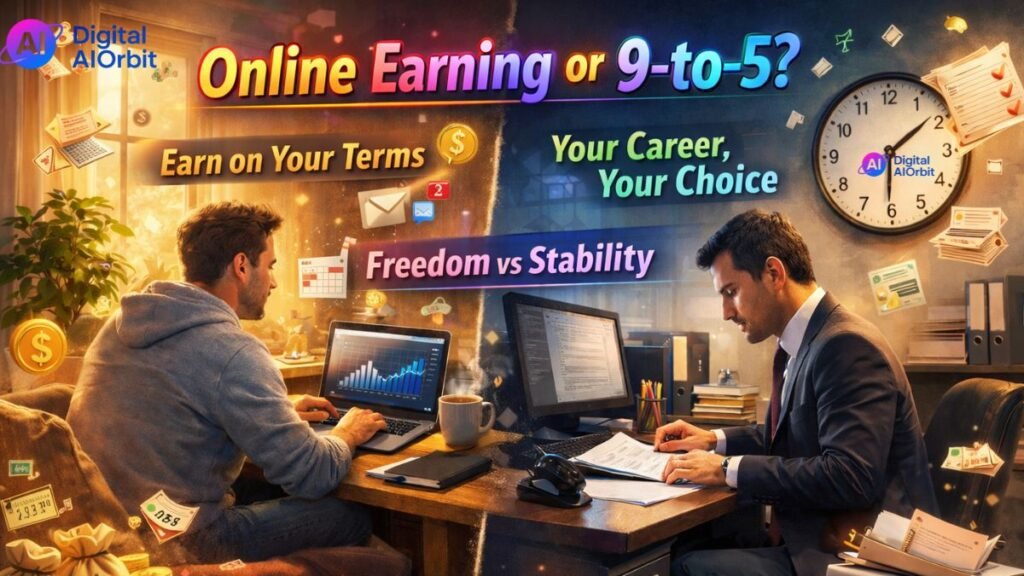
Online Earning vs Traditional 9-5 Jobs
Introduction:
Nowadays, most people ask the same question: Is online work better than a traditional job? To be honest, I have done both, so what I will talk about is not just hearsay but from my own experience.
A few years ago, I was working a regular 9-to-5 job. Waking up on time in the morning, going to the office, coming back in the evening — that was the daily routine. When I got paid at the end of the month, I felt relieved that at least I had a fixed amount of money. But at the same time, the traffic problem, the difficulty of taking leave, and the same schedule every day also made me tired sometimes.
Then I started working online. It was quite difficult at first. I remember my first month — I earned only $40 from a small writing gig and $250 from a website design project. It was exciting but stressful, and I quickly realized that online work requires planning and patience. Gradually, I learned to balance my time, and now I earn more consistently.
I think both paths are good; it just depends on the person’s situation and mood. Honestly, if you want a fixed salary and security, a traditional job is safer. But if you enjoy freedom, experimenting, and are willing to take risks, online work can be very rewarding.
That’s why in this article, we will look at both in a simple way so that you can decide for yourself which path is better for you.
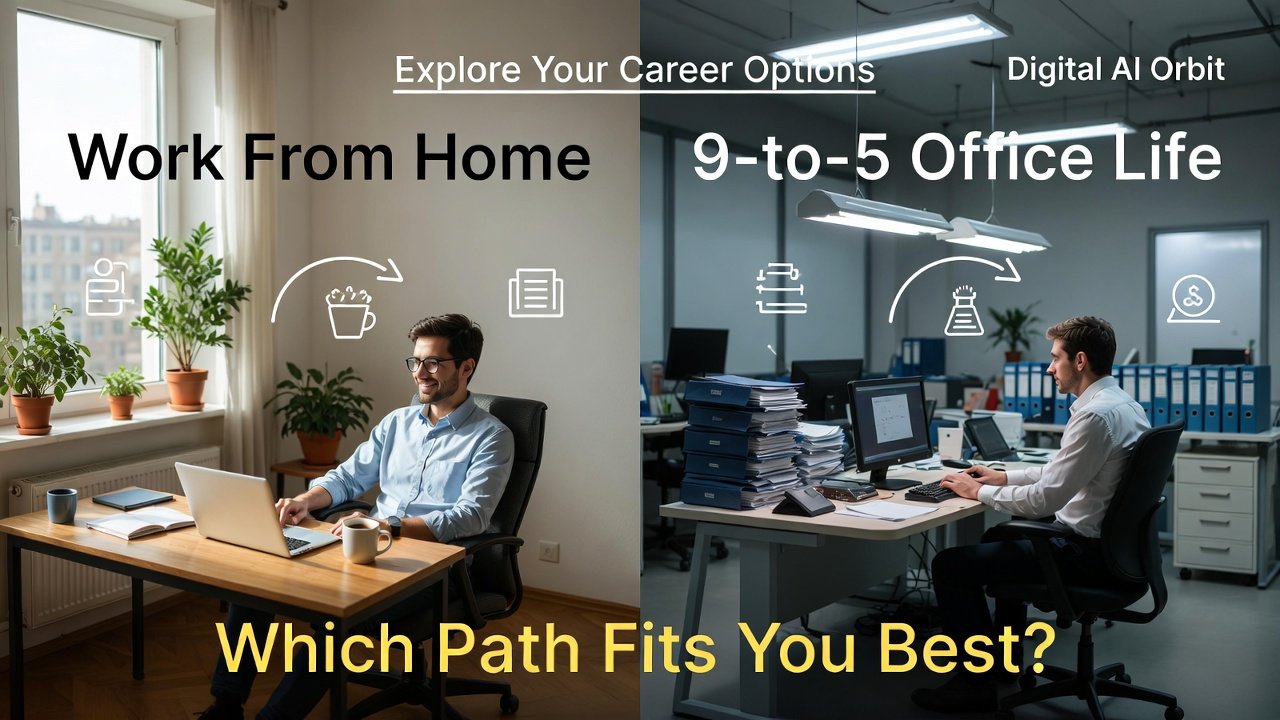
Understanding the Foundations of Both Career Paths
Look, first of all, understand something simple. Both traditional jobs and online work are work; just the method is different.
In a traditional job, you work for an office, company, or institution. The time is fixed, the place is fixed, and you get a fixed salary at the end of the month. You know where to go and what to do every day. When I was working, at least I had the peace of mind that I would know when the money would come.
Online work is different. Here you can work from home or anywhere with an internet connection. Work is mostly on a project basis. Sometimes there’s a flood of projects, and other times it’s quiet. At first, I found this unpredictability stressful, but it taught me how to budget, save for slow months, and stay disciplined.
In short, the biggest difference is that in a job, the system is already built, but online, you have to create your own system. Honestly, figuring this out was the hardest part for me.
What Is Online Earning? (Freelancing, Remote Work, Digital Businesses)
Online earning means earning money through the internet. That is, you don’t need to go to an office; you can work from home or wherever there is internet. Freelancing is when you use one of your skills, such as writing, designing, video editing, or building a website, and work for different people or companies. They give you a task, you complete it, and in return, you get paid. Remote work is a little different. In this, you work for a company, but not by going to an office, but from home. That is, there is a job, but online. Sometimes the time is fixed; sometimes it can be flexible. Digital business is a step beyond that. In this, you start your own online business, such as a blog, YouTube channel, online store, or any service. Here you are, the boss. Earnings are made slowly, but with hard work and patience, they can improve over time.
In short, there is more freedom in online earning, but the responsibility is yours as well.
What Defines a Traditional Job? (Corporate, Government, Private Sector Roles)
A traditional job is one in which you work regularly with a company or organization. You have an office, a set schedule, and get paid at the end of the month. In simple terms, this is the typical job that most people do.
A corporate job is usually in a large company. There, you have to work with a team, have a boss, have meetings, and everything runs according to a certain system.
A government job is in a government organization. People like it because it is considered more secure, and there are some benefits even after retirement.
A private job is at a small or medium-sized company. The environment here may be a little different, but the principles are almost the same — come on time, do your work, and get paid.
A traditional job has a set system. You know when to go, what to do, and how much you’re paid. This path is best for people who like stability and a set routine.
Historical Evolution of Employment Models
In simple terms, jobs have not always been the same but have changed over time to suit people’s needs and social circumstances. In the beginning, people mostly worked in agriculture or crafts, ran small businesses, or worked in villages. Then, with the advent of cities and factories, traditional jobs emerged, with fixed hours and pay. During the industrial era, corporate and government jobs became common, which were based on a system of punctuality, salary, and security. In the last few years, the internet and technology have changed everything, and people have started working from home through freelance or online businesses, which has given them freedom of time and space and created new opportunities. Thus, employment models have always been changing, and it shows that the ways of working change over time according to the needs of people.
The Impact of Digital Transformation on Global Work Trends
Digital transformation has changed the way people work around the world. Previously, most people would go to an office or factory, but now the internet and technology have made it common to work from home. People can earn money through freelance work, remote work, or online businesses. Companies have also changed systems, such as using online meetings, cloud storage, and digital tools. The biggest benefit is that people have more control over when and where they work, and new types of opportunities have also been created.
The difference is shown in a simple table below:
| Aspect | Before Digital Transformation | After Digital Transformation |
|---|---|---|
| Work Location | Office or factory only | Home, or anywhere with internet |
| Work Flexibility | Fixed working hours | Flexible schedules, remote options |
| Tools & Technology | Paper-based, offline systems | Cloud software, collaboration tools, video calls |
| Job Opportunities | Local jobs only | Global jobs and online projects |
| Communication | In-person meetings, phone calls | Email, chat apps, and video conferencing |
| Skill Requirements | Mostly formal education and local skills | Digital skills, self-learning, online courses |
Income Structure, Stability, and Financial Planning
The way you make money and the security of it are different between the two. In a traditional job, you get a fixed salary every month, so you know when you’ll get paid, and it’s easier to budget. Sometimes your income increases through bonuses or promotions, but your base income is almost always stable. This is not the case with online work. Sometimes your earnings can be high and sometimes low, especially in the beginning. If you work consistently, develop your skills, and build relationships with good clients, your income can gradually become stable. Financial planning is more important in online work because there can be occasional breaks.
For online work, income can be unpredictable. For example, last month I earned $900 from multiple small projects, but this month I made $1,500 thanks to one big client. You quickly learn that skill development and client relationships are key to stabilizing income.
A good rule I follow is saving at least 20% of each project’s payment for slow months.
Fixed Salary vs Project-Based or Variable Income
| Aspect | Fixed Salary (Traditional Job) | Project-Based / Variable Income (Online Work) |
|---|---|---|
| How You Get Paid | Same amount every month | Paid per project or task, can vary |
| Predictability | Easy to know, money comes on time | Hard to predict; depends on work |
| Extra Earnings | Sometimes a bonus or promotion | Depends on skills and clients |
| Risk | Low – stable income | Higher income can go up or down |
| Effort vs Reward | Steady effort, steady reward | Effort may vary; reward depends on project size |
| Best For | People who like security and routine | People who like flexibility and taking risks |
Here’s the “Predictability of Monthly Earnings” section in a table format:
| Aspect | Traditional Job (Fixed Salary) | Online Work (Variable / Project-Based) |
|---|---|---|
| Monthly Income | Predictable – same every month | Unpredictable – changes with projects |
| Planning Budget | Easy – can plan expenses around salary | Harder – need to save for slow months |
| Financial Security | High, steady money | Medium to low income may fluctuate |
| Stress Level | Low – you know when money comes | Can be higher – uncertain payment timing |
| Best Approach | Simple budgeting | Save extra; plan for gaps |

Bonuses, Incentives, and Performance-Based Growth
Traditional Job (Fixed Salary):
- Sometimes the company gives you a bonus, especially at the end of the year or for good work.
- Your salary can increase through promotions.
- The income is mostly fixed, and extra money sometimes comes.
- All these things are usually according to the company’s rules; you don’t have much control.
Online Work (Variable / Project-Based Income):
- Your earnings directly depend on your work and skills.
- The better the work and the more experience, the more earning opportunities.
- Income can suddenly increase when you get new clients or big projects.
- You have complete control, but there is also a high risk that sometimes your earnings will decrease.
Understanding Taxes and Financial Responsibilities in Both Models
Both methods require accounting and paying taxes, but the process is different. In a traditional job, most things are easy because the company deducts taxes from your salary and remits them to the government, so you don’t have to worry about much. In addition, savings, insurance, and retirement benefits are often provided by the company along with the salary, and financial responsibilities are clear and straightforward. On the other hand, in online work or freelancing, you have to do everything yourself. You have to keep track of every income you earn and pay taxes on each project. Since online income is unpredictable and project-based, it is important to budget and plan to save. In addition, insurance and other financial benefits have to be managed by yourself, so online workers have to be more careful in financial discipline and planning. Simply put, in a traditional job, tax and financial responsibilities are easy and supervised by the company, while in online work, you have to do everything yourself, including understanding and planning.
Planning Savings and Emergency Funds Regardless of Career Type
Whether you work in a traditional job or online, having a savings and emergency fund is essential. In a traditional job, since your salary is stable every month, you can easily set aside some money to save and create a fund for emergencies. This gives you peace of mind because you know you have money in case of an unexpected situation.
The situation is a little different in online work because your income can sometimes be high and sometimes low. Therefore, savings and emergency funds are even more important here. It is better to set aside a portion of each project for savings, so that you do not have financial worries during low-income months. No matter what your career, savings and emergency funds give you financial freedom and peace of mind, and help you in difficult times.
Skills and Learning for Career Success
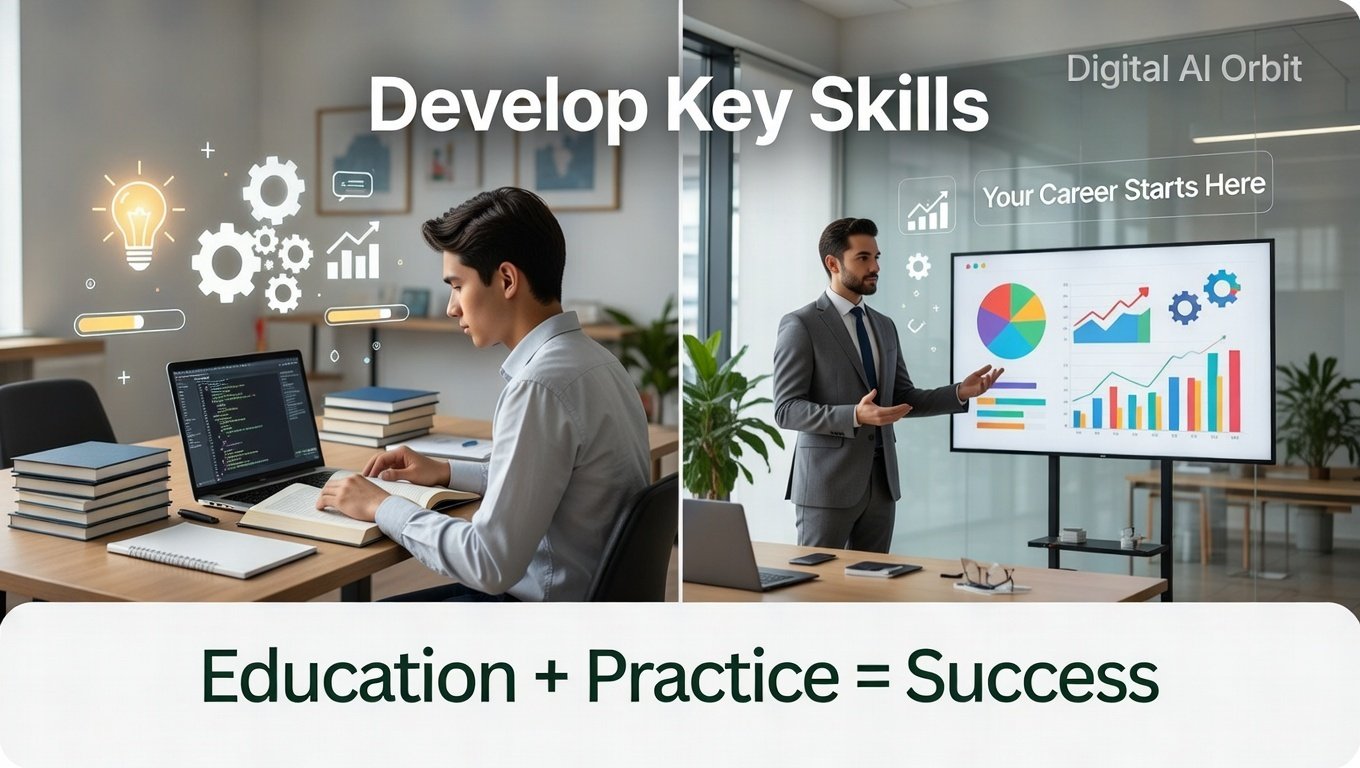
Skills and learning are the most important things for career success. A degree or some kind of certification is usually required in a traditional job, because companies want you to have a basic education and relevant experience. For example, if you want a job in accounting or engineering, a relevant degree will be mandatory. In addition, companies expect you to be willing to learn new systems or tools, so that your work can be done better and in a modern way.
They gain skills through experience. For example, freelance graphic designers or web developers often don’t go to university, but rather develop their skills through hands-on experience and online learning. At the same time, continuous learning is essential because technology and market demands are constantly changing. Those who keep learning new tools, software, or workflows are more likely to stay ahead of the competition.
Technical skills alone aren’t enough. Soft skills, such as good communication, time management, problem-solving skills, and teamwork, are just as important. Whether you’re working in an office or online from home, these skills will set you apart from others and make you more professional.
The formula for career success is this: Education, technical skills, and soft skills all combine to give you a strong foundation. People who are constantly learning, expanding their skills, and working on their soft skills become more successful and independent over time.

Work Flexibility and Lifestyle
The way you work and your lifestyle are quite different. In a traditional job, you have to go to the office, the hours are set in advance, and your day mostly follows the company schedule. This is beneficial if you like routine and a clear work system, but sometimes the strict hours and office restrictions can be tiring. The biggest difference with online work is that you have more control over time and space. You can work from home, from a coffee shop, or anywhere else, and set your own hours. This freedom is great, but it also comes with a lot of responsibility because if you don’t have self-discipline, your work can fall behind. There is also a difference in terms of lifestyle. Online workers are more flexible and can better plan their daily lives, while it is not so easy in a traditional job. But both have one thing in common: planning is essential to staying productive and avoiding burnout. This can include taking breaks from work, managing time properly, and taking care of your health and sleep.
Costs, Risks, and Entry Considerations
Before you join any career, you need to understand the costs, risks, and entry requirements. A traditional job usually doesn’t have huge expenses, but there are things like travel expenses to the office, daily necessities, or sometimes the need for specific clothing. Also, the job is usually more secure because the company offers you a steady income and some basic benefits, and the competition in the market is also more limited. Computer, high-speed internet, software, or marketing expenses. Here, your earnings depend on projects and clients, so there is a high risk that sometimes your earnings will decrease or you will not get any projects. The market is also competitive because everyone can work online from home.
That is why, whether you go for a traditional job or work online, it is very important to understand your personal risk tolerance. Think about how much uncertainty you can tolerate, and decide according to your budget and time. Simply put, knowing the costs, risks, and entry requirements will help you make the right decision and reduce worries in the future.
Long-Term Career Growth and Benefits
When we think about our careers, it is not enough to focus only on today’s earnings or immediate benefits, but also on how our future growth and financial stability will be. In a typical job, these things become quite easy because the company gives you various opportunities, such as promotions, paths to becoming senior, and company-provided benefits, such as health insurance, retirement plans, bonuses, and other incentives. All these things not only give you financial security but also set a clear path for you as to how your career will progress. You know that if you consistently work hard and show your worth while working with a company, you can get a promotion and a raise, all of which boost your financial and professional confidence. Online work, on the other hand, is a little different. Here, you mostly rely on your personal identity, skills, the quality of your projects, and relationships with clients. If you consistently build your profile, learn new skills, and build trust with good clients, your earnings can increase, and new and better opportunities may come your way. But in online work, no company offers insurance, retirement, or other benefits for your convenience, so you have to take care of everything yourself, and for this, planning, financial discipline, and prudence are very important Some people solve this problem by adopting a hybrid strategy, that is, they do some online projects or freelance work along with their regular job. This way, their income remains more stable, and they are also more financially independent, because if online work decreases in a month, the income from the job comes in, and if you take time off from your job to do online projects, you can earn extra money. This means you can get the best of both worlds, but it requires you to manage your time, energy, and financial planning well. To achieve career growth and financial stability in the long term, it is important to understand your path well, constantly work on your skills, be ready to learn and embrace new opportunities, plan financially, and take every step thoughtfully. Hard work alone is not enough, but prudence, consistency, and planning are just as important. If you do all these things, not only will your income improve, but your career will also remain stable and developing, and you will also feel that you are responsible for your own future and are moving forward with your decisions.
Conclusion
Both traditional jobs and online work have their advantages and challenges. I’ve tried both in my life, so these are based on practical experience, not just theory. The biggest advantage of a traditional job is stability and a fixed income. You get a paycheck every month, you get vacations and basic benefits, and your career path is clearer. But sometimes the tight hours, office restrictions, and limited flexibility can be exhausting.
Online work has given me the freedom of time and space. I can work from home or anywhere, set my own hours, and grow my income based on my skills. But earnings are uncertain in the beginning, and you have to do your own financial planning. Consistency, skill development, and building relationships with good clients are essential for online success.
Here are some simple success tips from my experience:
- Constantly improve your skills and learn new tools.
- Have a financial plan and save or have an emergency fund.
- Manage your time and energy, whether it’s a traditional job or online work, to avoid burnout.
- Try to build a personal brand in online work, so you have consistent opportunities.
- If possible, adopt a hybrid career by combining both models, so that your income is stable and opportunities are greater.
Ultimately, the decision depends on your circumstances, skills, and preferences. Both paths can provide a good life and financial stability; it’s just important that you move forward with understanding and planning.
Both work careers were explained very well.